Animal Profile
Coastal Rosy Boa
Lichanura orcutti
About Coastal Rosy Boa
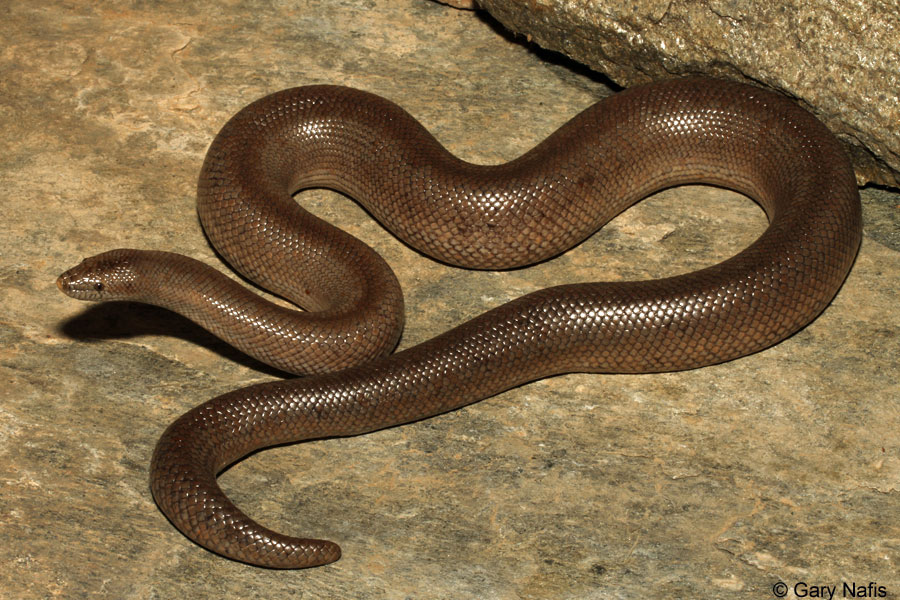
Formally classified as “coastal rosy boa” this rosy boa can reach lengths of 2-3ft. Coloration varies from grays to pinks to browns. The boas can be rather uniform in color or can have 3 darker stripes down the length of the body.
Habitat
All reptiles and amphibians are ectothermic (cold-blooded) animals, relying on their environment for thermoregulation. Rosy boas have adapted incredible survival strategies to endure unsatisfactory environmental conditions. Throughout most of their range the winter temperatures are below optimum. During this time, Coastal rosy boas go through a dormant period of reduced activity called “brumation.” Brumation is a term used for the hibernation-like state that cold-blooded animals utilize during very cold weather. Rosy boas spend most of their lives concealed beneath rocks and in crevices to escape the elements and natural predators.
Fun Fact
These thick bodied snakes are slow moving, in fact, they are among the slowest snakes in the world moving at speeds of 1mph.