Animal Profile
American Black Bear
Ursus americanus
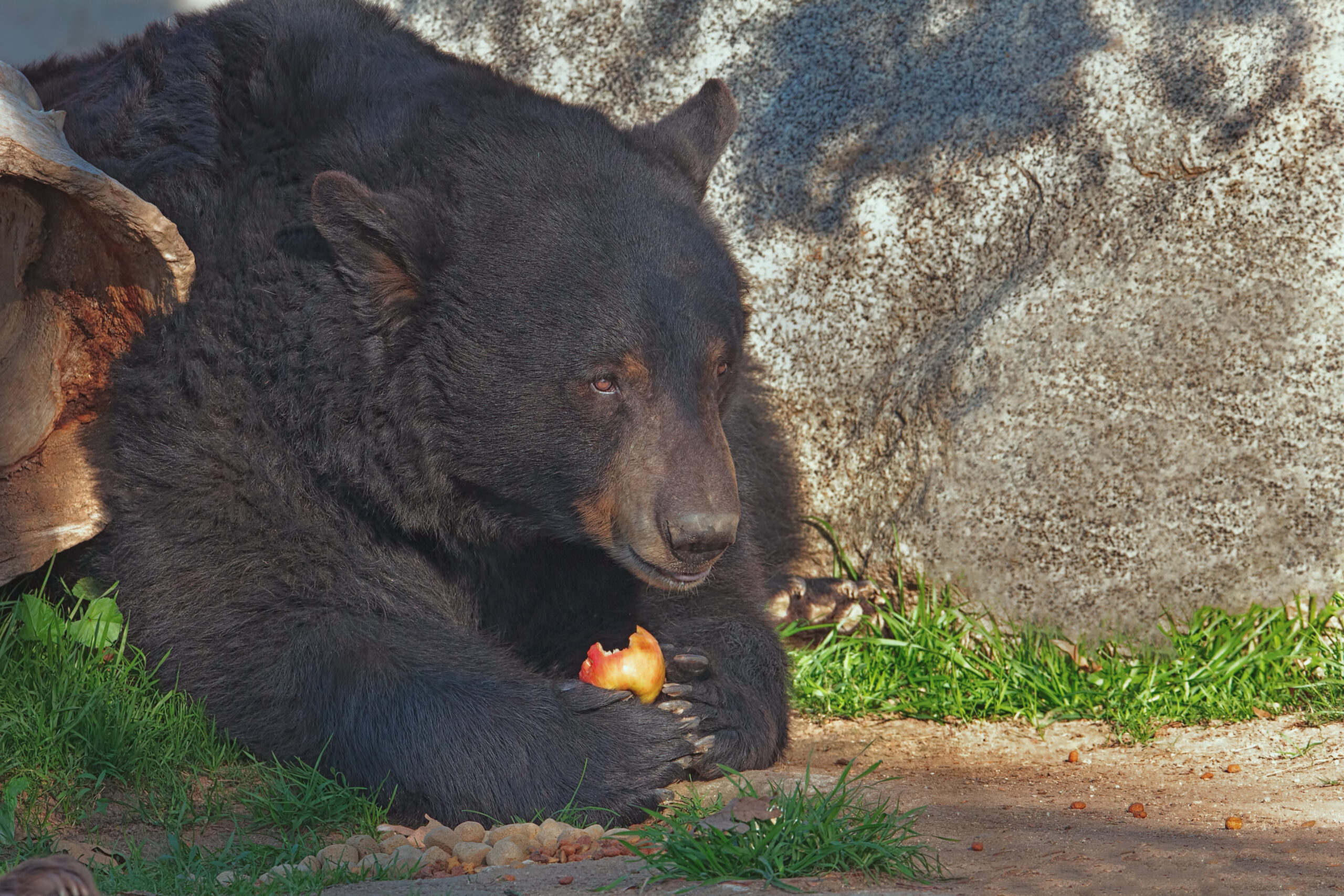
About American Black Bear
The black bear is the only bear currently living in California. The long, dense fur of a black bear isn’t always black; it may be cinnamon, dark brown, or yellowish brown. A white blaze on the chest is common; the muzzle is often golden. Bears have 5 toes on their front and back feet. They are plantigrade; they walk flat footed, just like humans! Their big toe is on the outside and claw marks are visible in their tracks.
Black bears are omnivorous and they have no cutting molars. They will eat anything organic: berries, nuts, vegetables, fungi, “truffles”, insects (bees and honey), larvae, mice, ground squirrels, and fish. They forage in garbage dumps and will invade apple orchards. They are not averse to eating carrion.
Bears do NOT really hibernate, but avoid the harsh weather in winter rest. Their body temperature only drops about 10 degrees with heart and respiration rates staying constant and they live off their stored fat. Bear cubs will stay with their mother, nurse and grow until she comes out of her den in the spring. They leave the family at 18 months.
Habitat
American Black Bears are highly adaptable mammals that primarily inhabit forested environments, including deciduous forests, coniferous forests, and mixed woodlands. They prefer areas with dense vegetation that provide cover, access to water sources, and abundant food supply such as berries, nuts, insects, and small animals. They can also be found in mountainous regions and occasionally near suburban areas where food is available.
Fun Fact
Despite their name, American Black Bears are not always black—they can also be brown, cinnamon, or even blonde in color depending on their region.